What is PWM in an ESC?| Pulse Width Modulation Explained
Learn how PWM (Pulse Width Modulation) works in an ESC, how duty cycle controls motor speed, and why PWM frequency affects performance in drones and EVs.
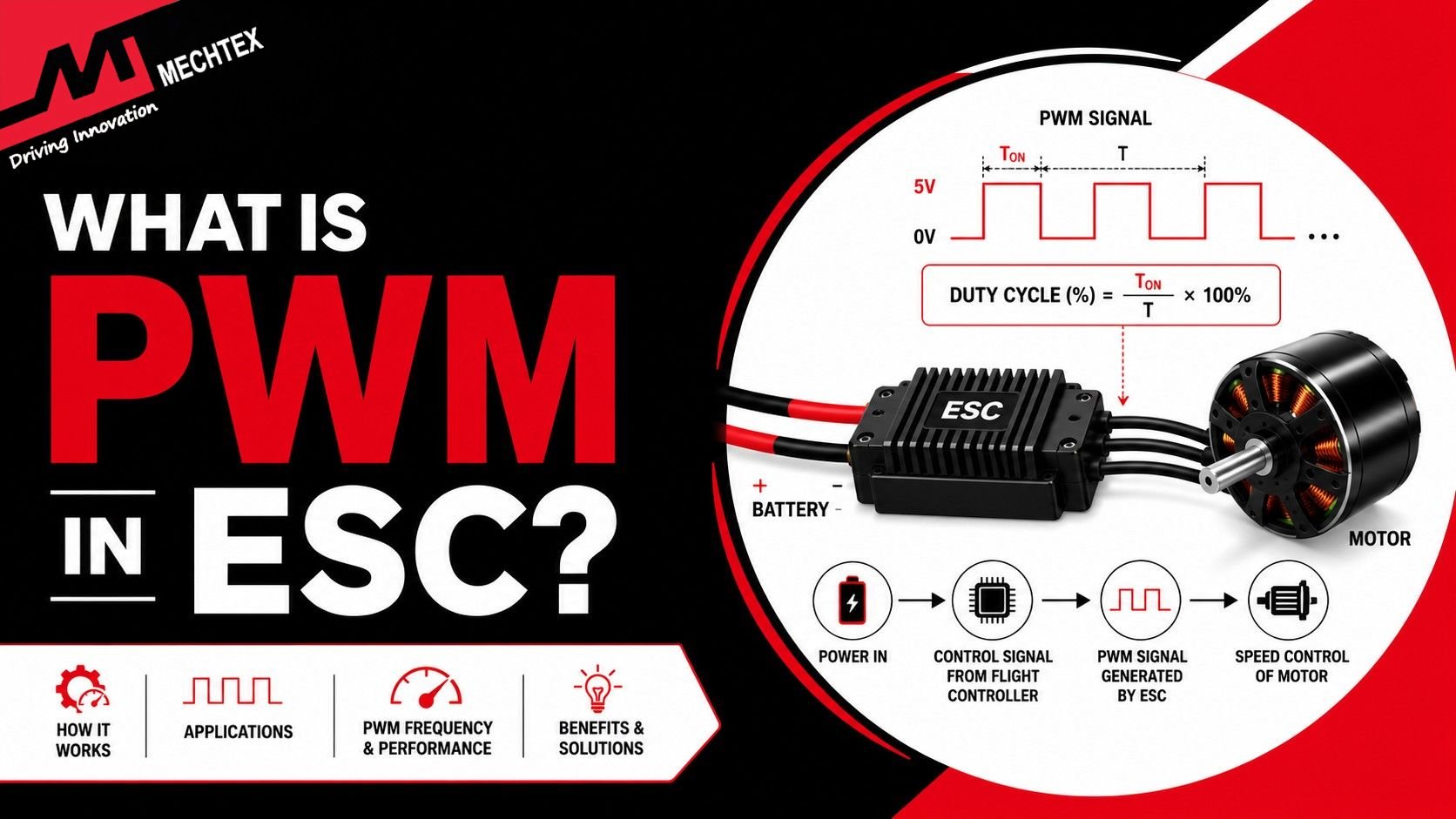
Modern electronics and automation systems, such as drones, robotics, electric vehicles, and industrial automation machinery, heavily rely on accurate motor control. Their motors need to run at different speeds depending on the load and requirement. This is where the Electronic Speed Controller (ESC) and Pulse Width Modulation (PWM) come into play.
An Electronic Speed Controller uses PWM signals to control the power supply to the electric motor, improving the motor's efficiency.
In this article, we will learn what PWM is, how it works in an ESC, its uses in different applications, and how PWM frequency affects motor performance.
What is PWM (Pulse Width Modulation) in an ESC?
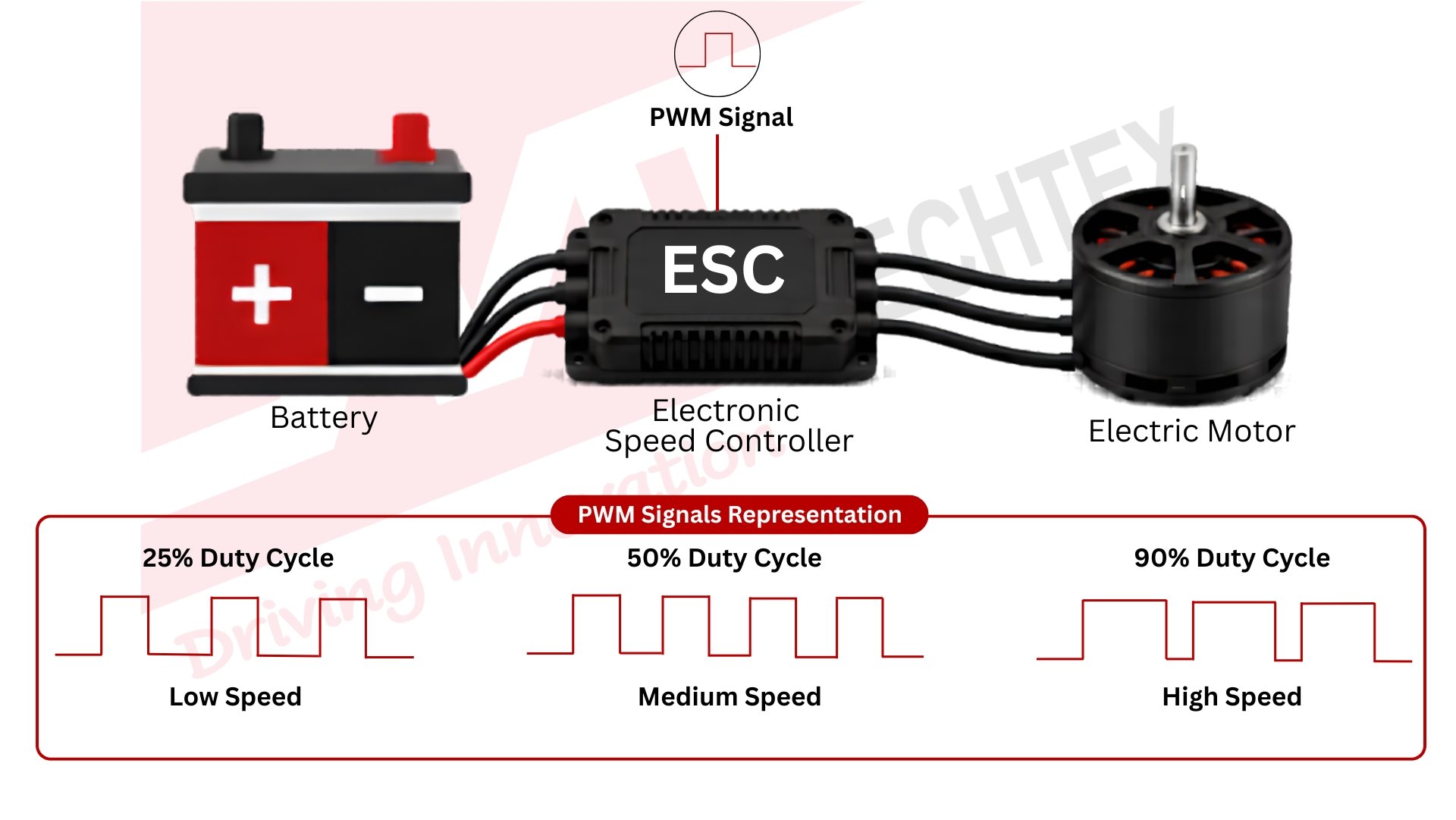
PWM (Pulse Width Modulation) is a technique used to regulate the power supplied to the electric motor using an ESC for smooth operation. Instead of changing the voltage, the ESC rapidly switches the power supply between ON and OFF using PWM signals to control the motor's speed. The longer the ON time, the more power is delivered to the electric motor.
It is similar to turning a light switch ON and OFF:
- If the switch is ON for a long time, the light will be turned ON for a longer time.
- If the switch is turned off very quickly, the light will be turned OFF.
The same principle is used by the ESC in an electric motor. A motor receives the PWM signals from the ESC at regular intervals. The width/length of the signals decides the speed of the motor.
Simple Understanding of PWM
The PWM technique works on two important concepts:
1. Frequency
2. Duty Cycle
Frequency: It means how many times the signal switches ON and OFF in one second.
Frequency measured in Hertz (Hz)
For example:
- 1 kHz = 1000 switching cycles per second
- 20 kHz = 20,000 switching cycles per second
Duty Cycle: The key factor in PWM is “duty cycle," which determines how long the signal will be ON.
Formula
Duty Cycle/PWM = Ton/T * 100%
Where,
TON = ON Time
T = Total Cycle Time
Example:
- 25% duty cycle means the motor will rotate at a low speed.
- 50% duty cycle means the motor will rotate at a medium speed.
- 90% duty cycle means the motor will rotate at a high speed.
**Higher the Duty Cycle = Faster the Speed of the Motor**
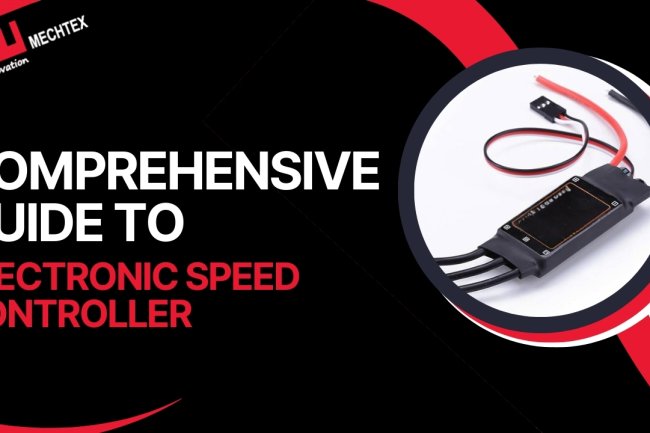
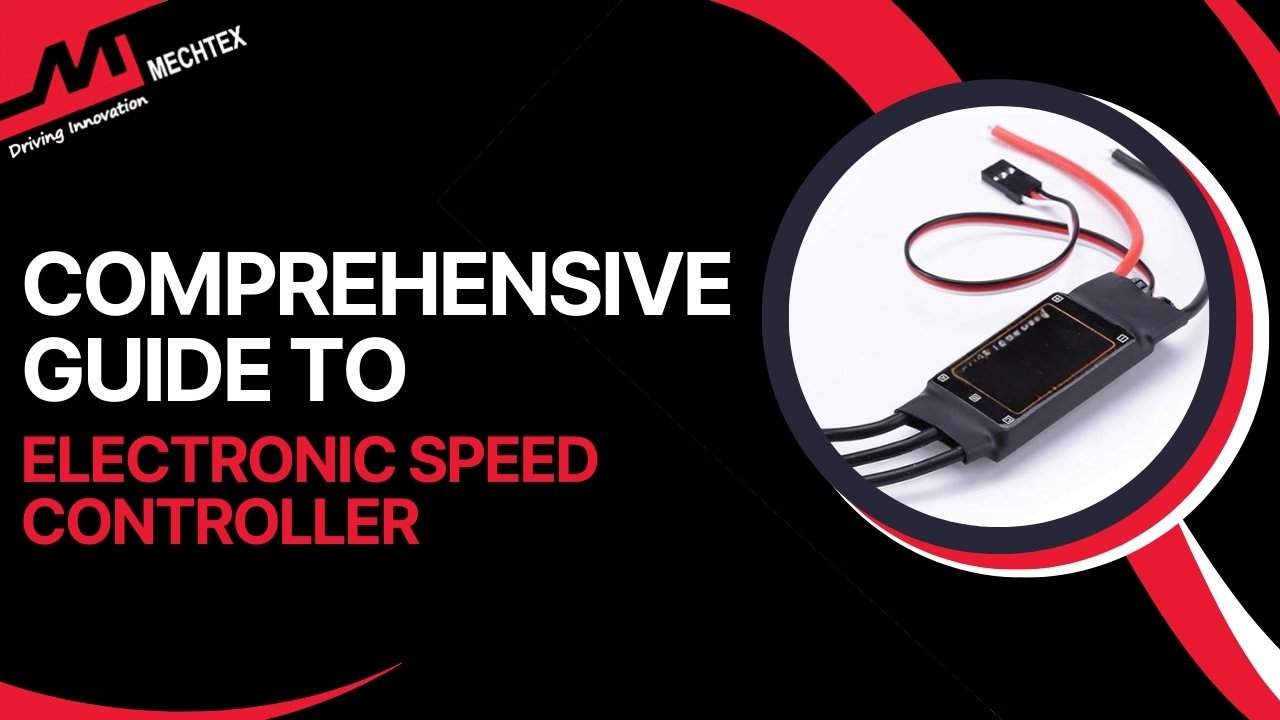
Also Read: A Comprehensive Guide to Electronic Speed Controllers (ESC)
How PWM Works in an ESC
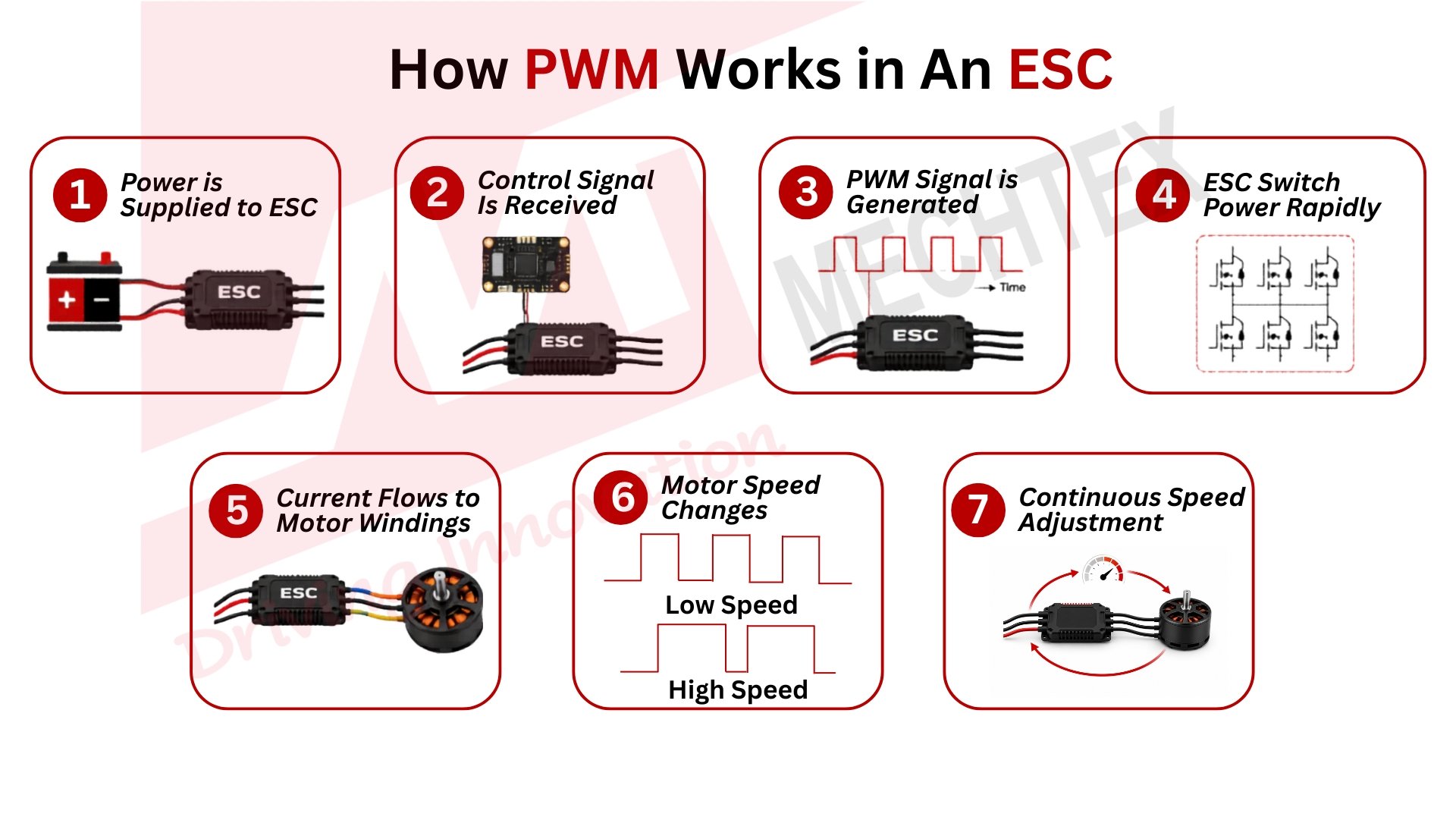
Step 1 - Power is supplied to the ESC
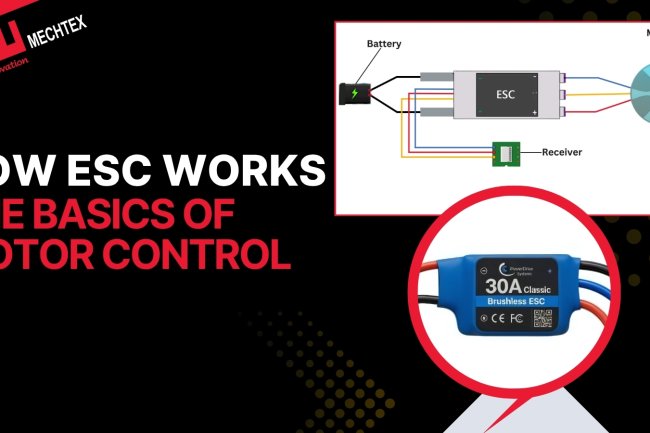
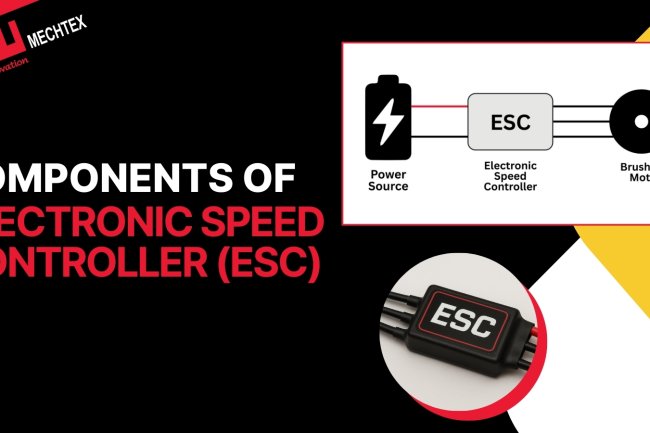
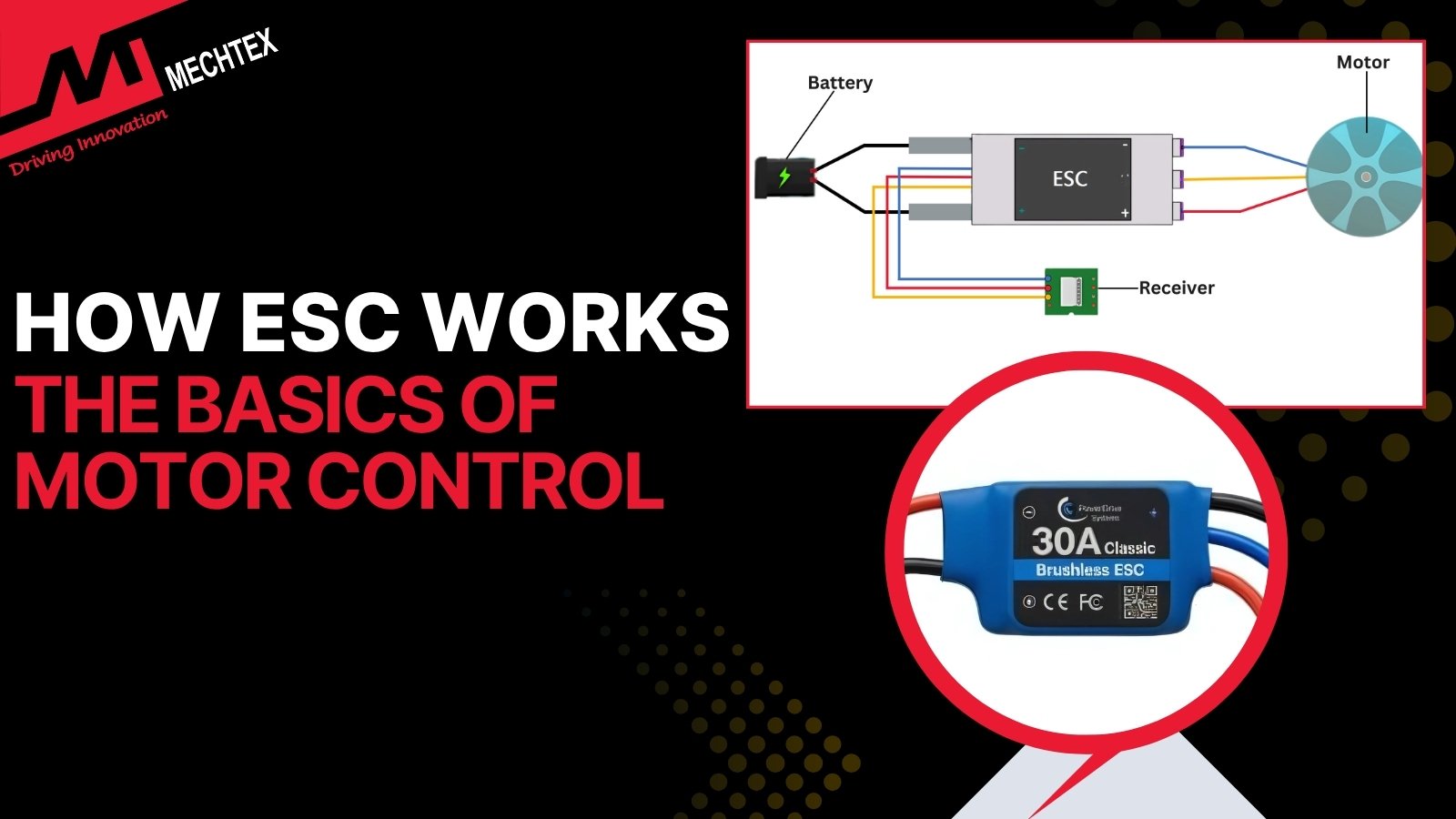
The battery is connected to the ESC and provides DC power to it. The ESC acts as a bridge between the power source and the electric motor. It regulates how much power must be supplied to the motor to control its speed.
Step 2: Control Signal is Received
The ESC receives a control signal from the flight controller or microcontroller. This signal informs ESC how fast the motor must rotate.
Step 3: PWM Signal is Generated
The ESC uses the Pulse Width Modulation (PWM) technique to regulate the speed of the motor. The PWM technique works by switching the power supply ON & OFF quickly.
The key factor in a PWM signal is “duty cycle." It indicates how long the signal will be ON and how fast the motor will rotate.
Step 4: ESC Switches Power Rapidly
Inside ESCs, MOSFETs turn the power ON & OFF thousands of times per second.
- Short ON Time = Less power supply to the motor.
- Long ON Time = More power is supplied to the motor.
Step 5: Current Flows to Motor Windings
The ESC sends electrical pulses to different windings of the motor in a specific sequence. This creates a rotating magnetic field inside the motor. This rotating magnetic field makes the motor to rotate as per the sequence.
Step 6: Motor Speed Changes
The ESC controls PWM signals to regulate the speed of the motor. As the PWM signal increases, the speed of the motor is high. If the PWM signal decreases, the speed of the motor is low.
Step 7: Continuous Speed Adjustment
The ESC continuously adjusts the PWM signals in real time as per the requirement. This allows smooth acceleration, deceleration, and precise motor control.
Also Read: How ESCs Work: The Basics of Motor Control
Why Is PWM Used?
Pulse Width Modulation (PWM) is used in various electronics such as electric motors, mobile phone displays, EVs, laptop chargers, and audio amplifiers to provide an efficient and smooth operation. Quickly switching the power ON and OFF helps control speed, brightness, temperature, and voltage of the electronic systems.
- Motor Speed Control
One of the most common applications where the PWM technique is used is in electric motors.
Pulse Width Modulation (PWM) Technique used in:
-
-
- BLDC Motor
- Brushed DC Motors
- Servo Motors
- Stepper motors
-
To control the power supply and regulate the speed of these motors.
- LED Brightness Control
PWM is used to control brightness efficiently with ON and OFF.
Applications are:
-
-
- LED Lighting System
- Mobile Phone Displays
- Smart Home Lighting System
-
- Electric Vehicles (EVs)
The PWM technique is widely used in electric vehicles for speed control and battery management.
Applications Involve the Following:
-
-
- Traction Motor Control
- Regenerative Braking System
- Electric Steering Movement
-
PWM also helps with battery charging and improves battery life in EVs
- Power Supplies and Voltage Regulation
PWM is used in power supplies and voltage regulators to maintain stable output supplies.
Applications include:
-
-
- DC-DC Converters
- Laptop Chargers
- Mobile Chargers
-
- Audio Amplifiers
PWM is used in Class D amplifiers. These amplifiers convert audio signals into PWM signals and make speakers work efficiently.
Applications Include:
-
-
- Bluetooth Speakers
- Home Theatre Systems
- Car Audio System
-
- Heating and Temperature Control
PWM regulates the power supplied to heating applications and controls their temperature.
Applications are:
-
-
- 3D Printer
- Industrial Heaters
- HVAC Systems
- Ovens and Microwaves
-
Impact of PWM on ESC Performance
- Smooth Motor Operation
PWM frequencies/signals supply power to the electric motor at regular intervals to enable smooth operation.
At Low PWM Frequency/Signal
-
-
- The motor may work roughly
- Experience More Vibrations
-
At High PWM Frequency/Signal
-
-
- Smooth Motor Operation
- Low Vibrations
-
- Noise of Motor
PWM frequency directly affects the motor's performance by generating noise.
-
-
- Low PWM frequency produces noise in the motor.
- High PWM frequency produces low noise and enables quiet motor operation.
-
For Example:
-
-
- 8 kHz ESC - Audible Motor Noise
- 24 kHz ESC - Quiet Operation
-
It is useful in medical devices, drones, and HVAC systems.
- ESC Heating
High PWM frequencies mean rapid switching of power by the ESC.
Rapid Switching results:
-
-
- Increases Switching Loss
- Rise ESC temperature
- High Heat Generation
-
- Motor Efficiency
PWM frequency affects the motor’s efficiency by supplying different levels of power at different stages.
Low PWM Frequency Results
-
-
- High Torque Ripple
- More Vibration
-
High PWM Frequency Results
-
-
- High Switching Loss in ESC
- Quiet Operation
-
ESC vs PWM (Short Overview)
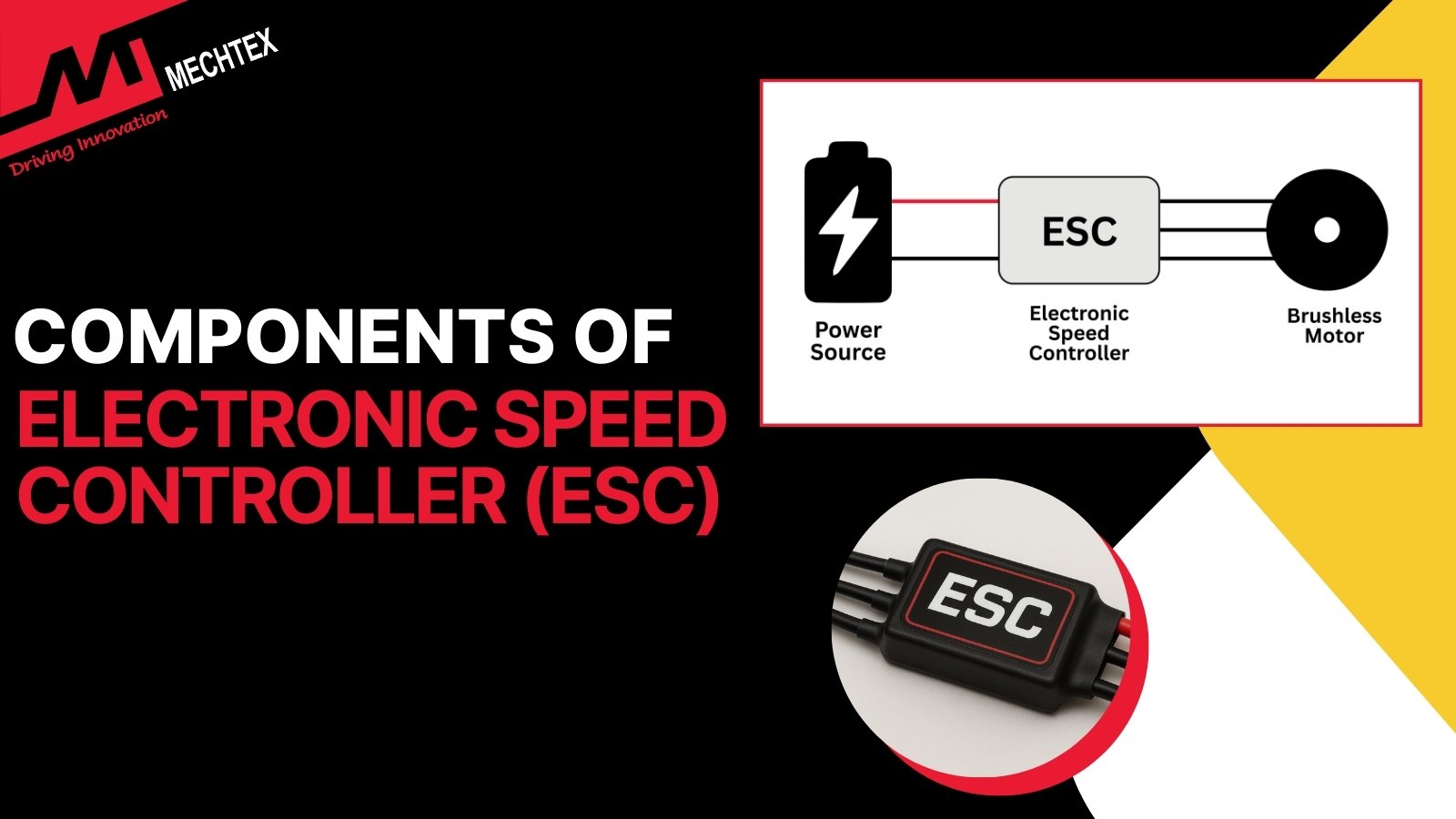
ESC (Electronic Speed Controller) is a device that controls the speed of the electric motor with the help of signals, while PWM (Pulse Width Modulation) is a technique used by ESCs to regulate the power supply to the motor.
In simple terms, the ESC (Electronic Speed Controller) is the controller, while PWM is a technique used by the ESC to control the speed of the motor.
An ESC receives signals from microcontrollers to control the motor, while PWM rapidly switches from ON to OFF to regulate the power supply to the motor. The ESC handles the motor functions and its protection from damage, while the PWM regulates motor speed and improves efficiency.
Also Read: A Comprehensive Guide to Electronic Speed Controllers (ESC)
Frequently Asked Questions
Q1. What is Duty Cycle in PWM, and how does it Control Motor Speed?
The duty cycle means the percentage of the total amount of time the PWM signal stays ON. It determines how much power is supplied to the motor. A 25% duty cycle means the motor rotates at low speed, a 50% duty cycle means medium speed, and a 90% duty cycle means the motor receives near-maximum power and rotates at high speed.
Q2. What is the difference between PWM and ESC?
An ESC (Electronic Speed Controller) is a device used to regulate the speed of the motor. PWM is the technique used by the ESC to regulate the speed of the motor through efficient distribution of power to the motor.
Q3. What PWM frequency is best for a BLDC motor ESC?
The ideal PWM frequency for BLDC motors is 8 kHz to 32 kHz. An 8 kHz PWM frequency is ideal for industrial applications where high torque is required. A 32 kHz PWM frequency is ideal for drones and medical devices where quiet operation is required.
Q4. Does PWM frequency affect ESC heating?
Higher PWM frequency means rapid switching between ON and OFF, which results in switching losses and generates heat inside the ESC.
Q5. Can PWM damage an ESC or motor?
PWM or ESC cannot directly damage the motor. But operating an electric motor at a very low PWM frequency generates high torque ripple, creates vibrations, and increases mechanical stress, which can significantly damage the motor over time.
Conclusion
PWM (Pulse Width Modulation) plays a significant role in modern control systems by regulating the speed of the motor through rapid ON & OFF. It also helps to deliver a smooth operation and better efficiency. Understanding the PWM and how it works with the ESC helps one to tune the right ESC settings for improved performance.