Why Motor Fails to Start Under Load? Causes, Impact & Practical Fixes
Motor not starting under load? Learn its impact on industrial operations, common causes like low torque and voltage issues, and practical solutions to ensure reliable performance.
Electric motors are the most crucial components of every industrial application. Whether it's a conveyor belt, packing machines, robotics, or HVAC systems, electric motors are responsible for converting electrical energy into mechanical motion to keep the applications running efficiently.
In industries, motors are expected to perform under varying load conditions. However, one of the most important phases of its operation is starting up. At this stage, the electric motor must generate sufficient torque to overcome the initial load called inertia.
If the motor fails to start during the initial stage, it just does not affect any one component; it disrupts the entire system.
In this blog, we’ll break down the key causes, practical fixes, and preventive measures to help you troubleshoot this issue effectively.
Impact of Motor Not Starting Under Load
When a motor does not start during the initial stage, the consequences can go beyond the operational disruptions. It can lead to serious inefficiency and maintenance challenges.
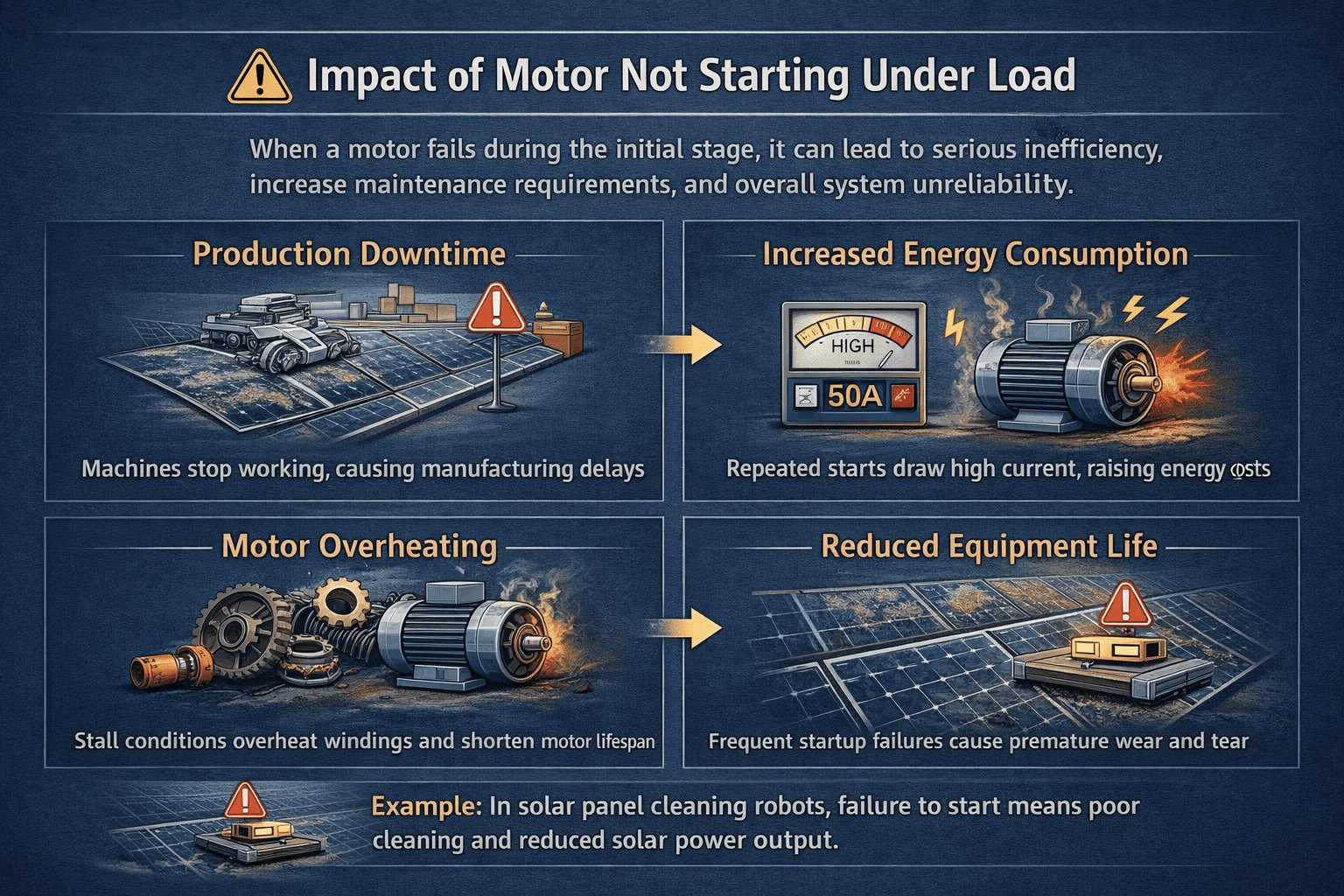
Some of the major impacts are:
- Production Downtime
Due to motor failure, the machines stop working, which leads to a delay in manufacturing and affects production.
- Increased Energy Consumption
Repeated start attempts draw high current, which leads to an increase in power consumption.
- Motor Overheating
A prolonged stall condition of the motor can overheat the windings and reduce the motor's life.
- Reduced Equipment Life
Multiple startup failures lead to premature wear and tear and reduce the application's life.
For example, in a solar cleaning robot, motors must start under load while moving across the panels. If the motors fail to start the cleaning robot properly, it may stall and fail to complete its cleaning cycle, leading to inefficient panel cleaning and reduced power generation.
Common Causes of Motor Not Starting Under Load
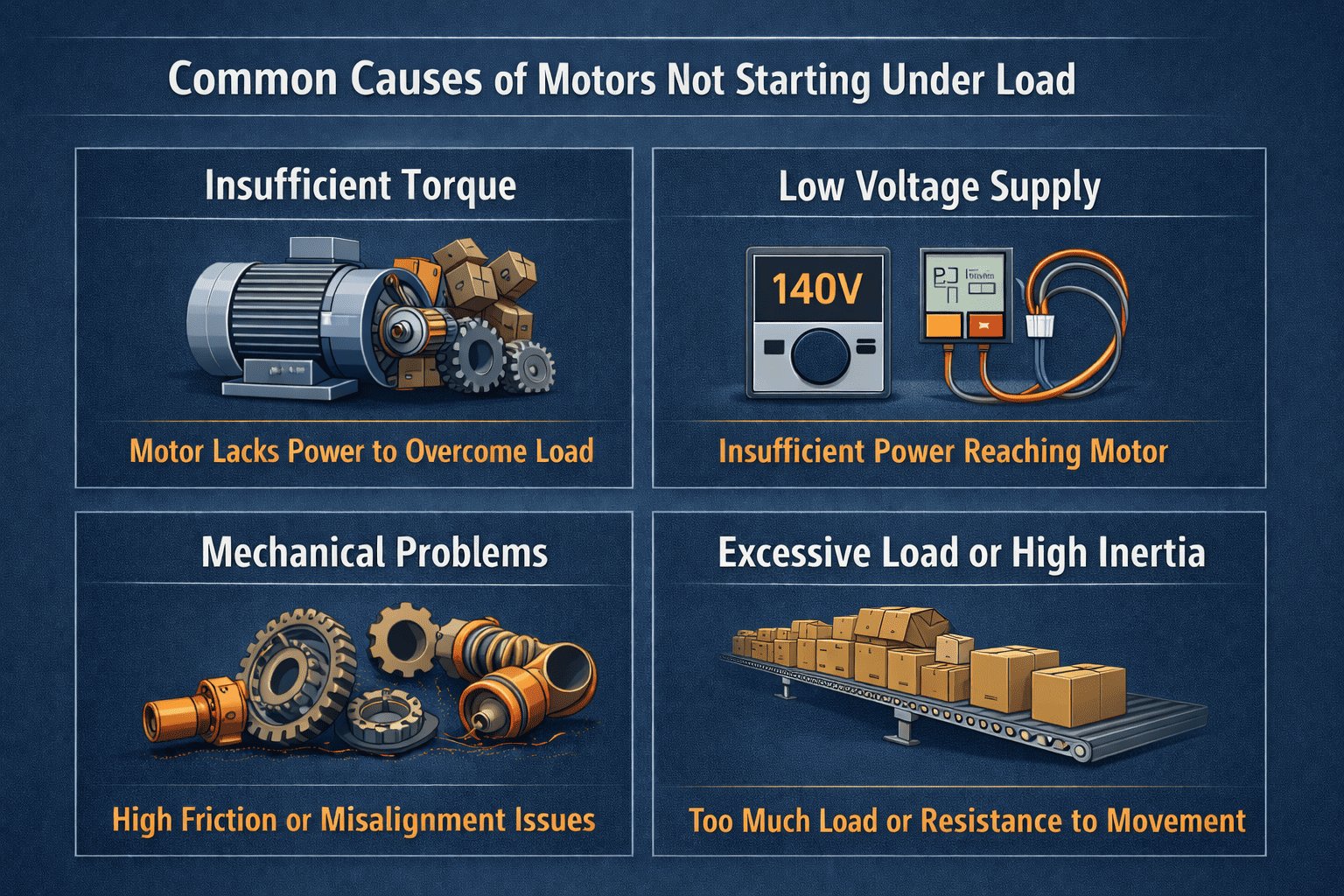
- Low Starting Torque
Every motor has a defined starting torque. If the required torque to start the motor is higher than required, it fails to start.
The issue commonly arises due to:
-
-
- The motor is not suitable for the application.
-
-
-
- High load systems are used without the torque.
-
In such cases, the motor only vibrates but does not provide actual motion.
- Undervoltage Supply
Motor performance is highly dependent on the voltage. In fact, torque is proportional to the square of the voltage. This means even a small voltage drop can reduce starting torque.
Reasons for undervoltage:
-
-
-
- Long cable length causes a voltage drop
- Fluctuating or unstable power supply
-
-
This is a very common issue in industrial applications where multiple machines operate at a time.
- Excessive Load or High Inertia
Applications such as conveyors or compressors require high inertia. These applications require a large amount of torque during startup.
If the motor is not designed to handle heavy loads, it will struggle or fail to start. Even if it starts, it may operate inefficiently.
- Mechanical Resistance
Mechanical issues can physically prevent the motor shaft from rotating. Even a proper motor will fail if excessive resistance exists.
Common reasons for mechanical resistance:
-
-
-
- Worn-out bearings
- Misaligned shafts
- Accumulation of dust and particles.
-
-
Effective Fixes and Solutions
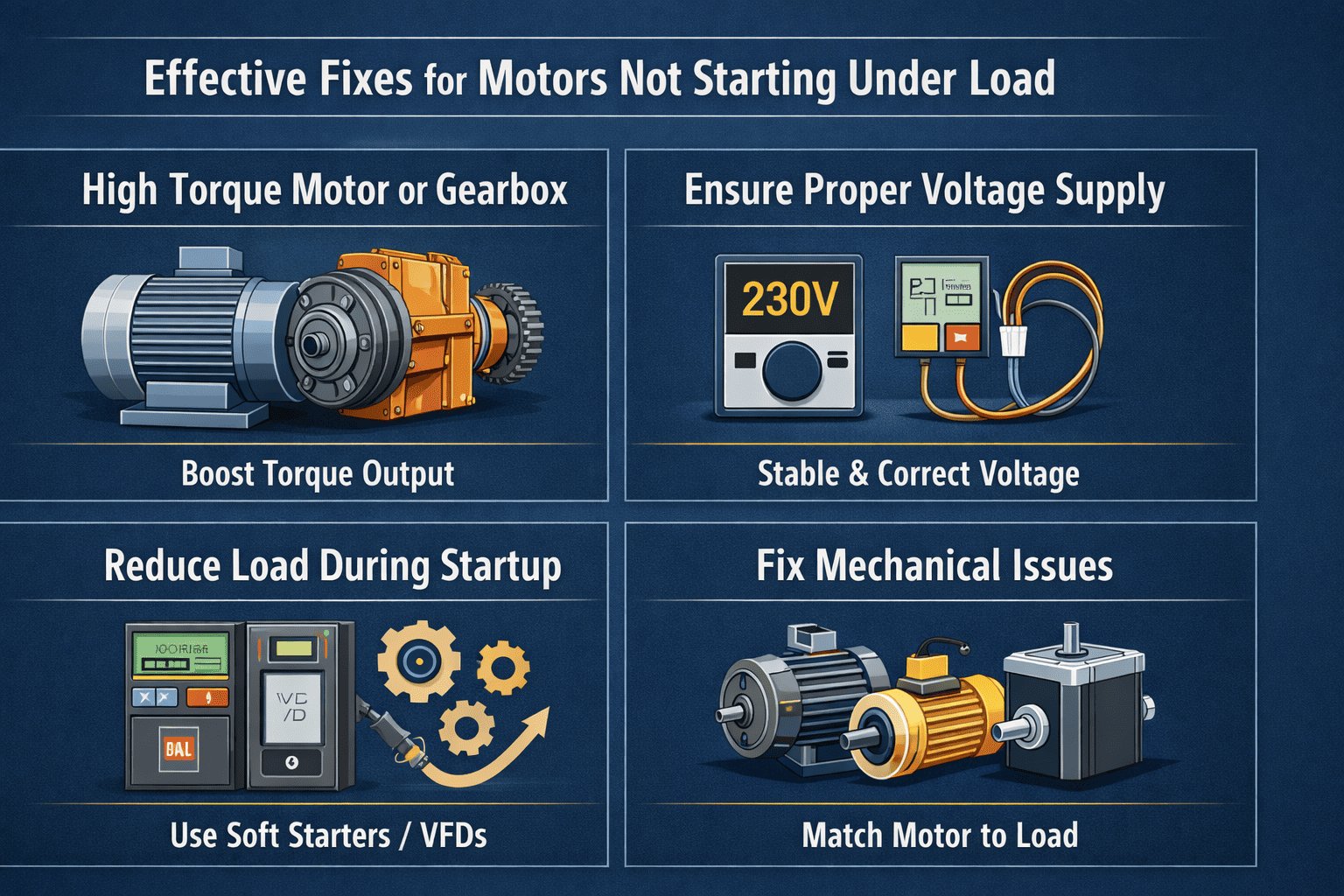
- Use a High Torque Motor or Gearbox
If the major reason for motor failure is insufficient torque, then upgrading the motor system becomes essential.
Selecting a motor specifically designed for high torque ensures it can overcome load, especially during start-up. In many applications, integrating a gearbox is an essential solution, as it multiplies torque without requiring a large motor.
Implementing these solutions not only resolves starting issues but also enhances overall efficiency and long-term system reliability.
- Ensure Proper Voltage Supply
Maintaining a proper voltage supply is essential for the reliable performance of a motor. Even a slight voltage change can significantly reduce the motor's torque and lead to failure.
To avoid voltage fluctuations, use a suitable cable that can handle the required current without loss. Minimising voltage drop in wiring and ensuring a consistent, stable power source further supports efficient operation.
- Reduce Load During Startup
Reducing the load at the time of startup can significantly improve motor performance and prevent stalling issues. When a motor starts with a lower initial load, it requires less torque to begin rotation, allowing it to reach operating speed more efficiently.
This approach helps minimise stress on both the motor and connected equipment, ensuring smoother and more reliable operation.
- Fix Mechanical Issues
Mechanical resistance can significantly hinder a motor’s ability to start under load, making it essential to keep all moving components in optimal condition.
Regular lubrication of bearings helps reduce friction and ensures smooth movement, while proper alignment of shafts and couplings prevents unnecessary load on the motor.
Conclusion
Motors are a vital part of industrial systems, and their ability to start under load directly affects productivity and efficiency. A motor not starting under load is often a result of insufficient torque, voltage issues, mechanical resistance, or improper system design.
By understanding these causes and implementing the right fixes, industries can ensure smooth operation, reduced downtime, and longer equipment life.
A well-designed motor system not only improves performance but also contributes to energy efficiency and operational reliability, making it a key factor in modern industrial success.